
Traveling to Vietnam is not just about exploring famous destinations, but also about enjoying a diverse and rich culinary scene. From pho, banh xeo, and Quang noodles to home-style rice dishes, each dish tells a story about the land and its people. If you’re looking for a Vietnamese restaurant in Da Nang, you can begin your culinary journey with familiar dishes that nonetheless possess the unique flavors of each region.
Why Should Tourists Experience Vietnamese Restaurants?
Cuisine is an important part of Vietnamese culture. For foreign tourists, a meal at a Vietnamese restaurant is not simply about enjoying the food, but also a way to learn more about the local life, customs, and culture.
Discover the distinctive flavors of Vietnam.
Vietnamese cuisine is distinguished by its balance of various flavor groups such as salty, sweet, sour, spicy, and bitter. Aromatic herbs, fish sauce, onions, pepper, chili, lime, and many local spices are often combined to create its characteristic flavors.
Interestingly, even with the same ingredients, the cooking methods can vary depending on the region. Therefore, experiencing Vietnamese cuisine at a restaurant can help visitors appreciate the richness of this culinary tradition.
Enjoy the food in a Vietnamese setting.
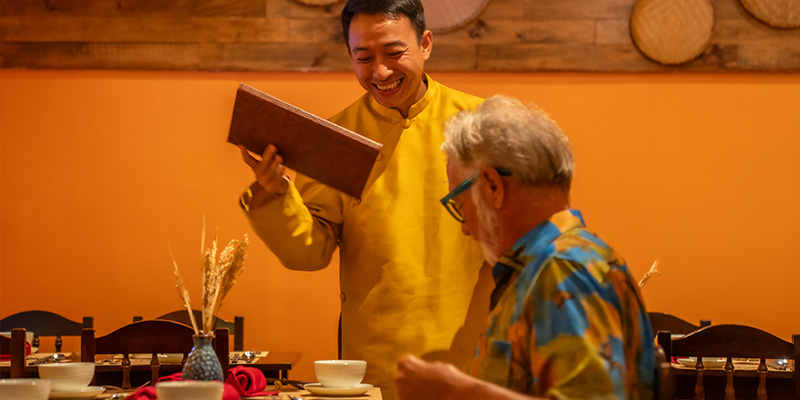
Many Vietnamese restaurants today focus on both the food and the ambiance. Details such as wooden tables, lanterns, natural materials, or the way food is served can create an experience that is closer to the local culture.
For tourists, this is also an opportunity to experience a part of Vietnamese life instead of just visiting tourist attractions.
Vietnamese Restaurants in Da Nang – What Dishes Should Tourists Try?
Da Nang is a popular destination known for its beaches, scenery, and tourist services. The city is also a place where visitors can easily find many characteristic dishes from Central Vietnam and other regions.
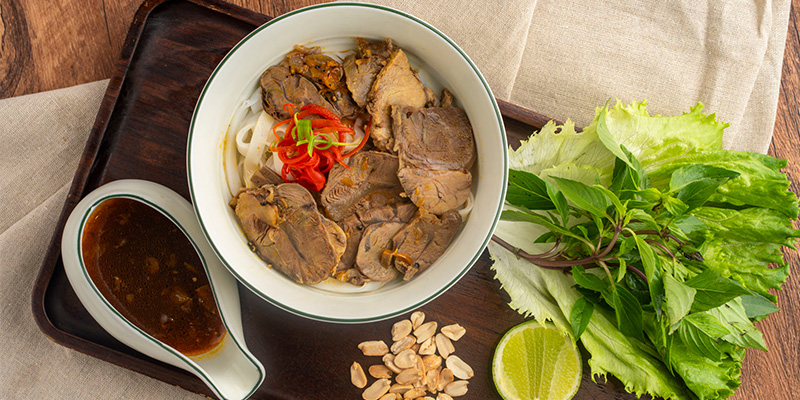
Quang noodles
Mì Quảng is one of the signature dishes of Central Vietnam. A bowl of this noodle dish typically includes wide rice noodles, meat or shrimp, fresh vegetables, peanuts, and a moderate amount of broth.
Unlike many noodle dishes, Quang noodles don’t have a lot of broth. When eating, diners can mix all the ingredients together to combine the noodles, vegetables, meat, and sauce.
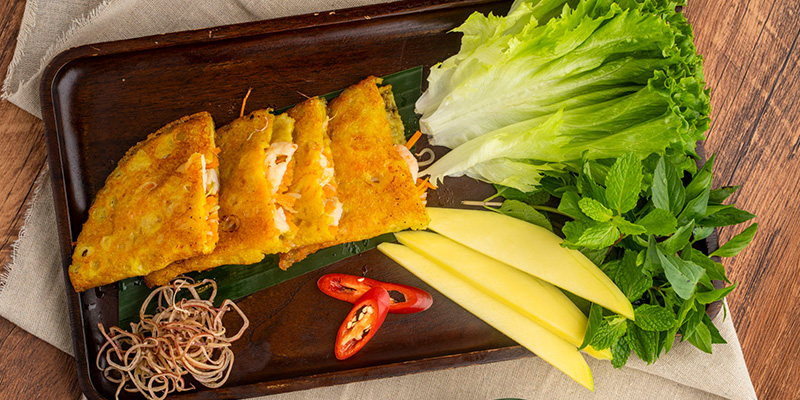
Vietnamese savory pancake (Banh Xeo)
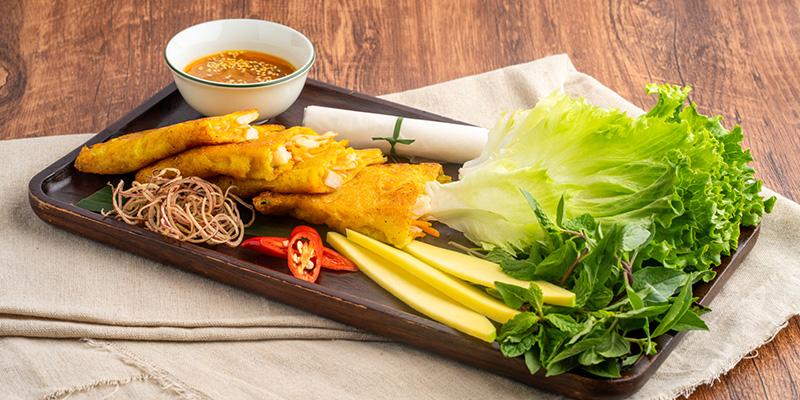
Banh xeo (Vietnamese savory pancake) is a familiar dish to both Vietnamese people and international tourists. The crispy golden crust is made from rice flour, combined with ingredients such as shrimp, meat, and bean sprouts.
A popular way to eat it is to wrap the pancake with fresh vegetables in rice paper and dip it in the dipping sauce. This way of enjoying it creates a combination of crispy, fresh, fragrant, and rich flavors.
Noodle soup
Pho is one of the most widely known Vietnamese dishes in the world. The broth is cooked with various spices and served with rice noodles and beef or chicken.
For first-time visitors to Vietnam, pho is often the most accessible option. However, to explore Vietnamese cuisine in more depth, visitors should also try signature dishes from Central Vietnam and family-style meals.
Vietnamese rice
Vietnamese rice dishes are quite different from many street food dishes. A typical Vietnamese meal consists of white rice served with various savory dishes, vegetables, soup, or stew.
Dishes like braised meat, braised fish, stir-fried vegetables, or soup create a balanced meal that is close to the familiar atmosphere of Vietnamese family life. This is a suitable choice for tourists who want to learn about how Vietnamese people eat their meals every day.
Exploring Vietnamese Cuisine Across Three Regions
One of the distinctive features of Vietnamese cuisine is the clear difference between regions. Each region has its own ingredients, seasonings, and cooking styles.
Northern Vietnamese cuisine
Northern Vietnamese cuisine typically emphasizes lightness and balance. Dishes don’t necessarily use excessive amounts of strong spices; instead, they focus on highlighting the natural flavors of the ingredients.
Pho, bun cha, and many other home-style dishes are familiar representatives of this culinary style.
Central Vietnamese cuisine
Central Vietnamese cuisine is typically characterized by its rich flavors and distinctive presentation. Many dishes are spicy and salty, and utilize a wide variety of spices.
Quang noodles, banh xeo (Vietnamese savory pancake), Hue beef noodle soup, and other signature dishes of Da Nang and Hoi An are must-try experiences for tourists.
Southern Vietnamese cuisine
Southern Vietnamese cuisine tends to favor a more pronounced sweet flavor and makes full use of vegetables, fruits, and seafood from the riverine regions.
Southern Vietnamese cuisine is often characterized by its richness, ease of eating, and suitability for a wide range of tastes.
Things Foreign Tourists Should Know When Eating at Vietnamese Restaurants
Each cuisine has its own way of being enjoyed. Understanding a few basic customs will help foreign visitors feel more comfortable when dining at Vietnamese restaurants.
The dipping sauce is an important part.
Fish sauce, sweet and sour dipping sauce, or other signature sauces appear in many Vietnamese dishes.
Visitors can try a small amount first to get acquainted with the taste. Not every dish needs to be served with the same type of dipping sauce.
Herbs are often served as an accompaniment.
Fresh vegetables, herbs, and spices are often served alongside the main course. They not only add freshness to the dish but also balance the rich flavors.
If you’re not used to them, you can try each type of vegetable in small quantities.
In Vietnamese dining culture, many dishes are placed in the center of the table for everyone to enjoy. Therefore, dining in groups is a convenient way to try a variety of dishes in the same meal.
This is also an interesting part of the Vietnamese culinary experience.
How to Enjoy a Complete Vietnamese Meal?
After choosing the right dish, the way you enjoy it also significantly impacts the experience. A few simple principles can help travelers explore Vietnamese cuisine more easily.
Start with familiar dishes.
If you’re trying Vietnamese food for the first time, you can start with pho, banh xeo (Vietnamese savory pancake), rice dishes, or Quang noodles. These dishes have relatively recognizable ingredients.
Later, you can expand to dishes with more distinctive flavors.
Instead of ordering just one dish per person, the group of travelers could order several different dishes and share them at the table.
This method allows people to try many different flavors and gain a better understanding of the diversity of Vietnamese cuisine.
Ask the staff if you don’t know how to eat it.
If you’re unsure how to eat a dish, you can always ask the staff. A Vietnamese restaurant that caters to international customers can usually guide you on how to wrap, mix, dip, or combine ingredients.
This is especially useful for dishes with multiple ingredients that are served separately.
Vietnamese Restaurants Offer More Than Just a Meal
A memorable dining experience often comes not just from the food itself. It’s also about the ambiance, the service, the story behind the dish, and the diner’s emotions.
Every dish has a story.
Vietnamese cuisine is closely linked to family life and local culture. A dish can reflect the ingredients of the region, traditional cooking methods, or the lifestyle habits of the people.
Therefore, enjoying Vietnamese food is also a way for tourists to learn more about Vietnam.Vietnam.
Experience atNgon Da Nang Vietnamese Cuisine Restaurant
For travelers looking for a place to explore Vietnamese cuisine in Da Nang,Ngon Da Nang Vietnamese Cuisine RestaurantAiming to provide a Vietnamese culinary experience with dishes inspired by various regions.
Instead of focusing on a single dish, the restaurant experience can allow diners to explore a variety of flavors within a single meal.
The ambiance, the food, and the service all contribute to creating a suitable experience for those who want to learn more about Vietnamese culinary culture during their trip to Da Nang.
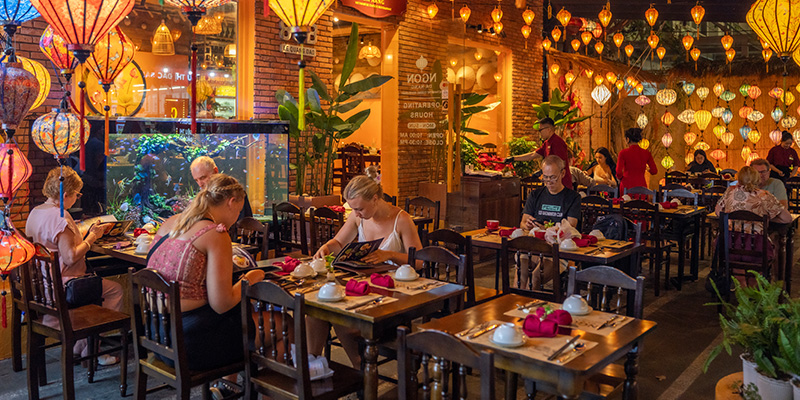
A meal can become part of a trip.
After a day of exploring the city, the beach, or the sights, a Vietnamese meal is a time to relax and reconnect.
It could be a family meal, a dinner with friends, or simply an opportunity for tourists to try a dish they’ve never heard of before.
Conclusion
Search for oneVietnamese restaurantIt is one of the simplest ways for tourists to explore Vietnamese culture through food. From pho, Quang noodles, and banh xeo to…Vietnamese riceEach dish tells its own story and has its own unique style.
Especially in Da Nang, tourists have the opportunity to enjoy many signature dishes of Central Vietnam alongside popular dishes from other regions of Vietnam.
If you want to understand Vietnam not only through its sights but also through its flavors, take the time to sit down, order some dishes, try different ingredient combinations, and share the meal with your travel companions. Sometimes, a delicious meal is one of the most memorable memories of a trip.
—-
Contact information
Address: 88B Le Quang Dao Street, Ngu Hanh Son District, Da Nang
Phone: +84 387 979 043
Email: johnthanhicdanang@gmail.com
Fanpage: https://www.facebook.com/ngondanangvietnamesecuisine
Instagram: https://www.instagram.com/ngondanang.vietnamesecuisine
Website: https://ngondanangrestaurant.com/